MENU
CLOSE
Summit
Other events
Publications
About

How to address the challenges of FOOD & AGRICULTURE?
We face the dual challenge of feeding 10 billion people sustainably by 2050 while reducing the global impact of our agri-food system. Approximately one third of the world’s arable land is degraded. However, healthy soils can provide a vital solution to mitigate climate change by sequestering carbon.

FOSTERING REGENERATIVE AND ORGANIC AGRICULTURE
Regenerative agriculture aims to produce food while restoring soils, capturing atmospheric carbon, and enhancing long-term food production capabilities.
Sustainable practices involve organic farming, pesticide-free cultivation, agroforestry, crop rotation, and hedgerow planting.
According to the IPCC, these practices could cut emissions from agriculture by 75% while boosting carbon storage in soils and biomass.


CO2eq. (in kg) for every kilogramme of food produced
Source : Agribalyse® Data for 2023
Did you know?
According to the FAO, if food waste were a country, it would rank as the third-largest emitter of CO2, surpassed only by the United States and China!
SUPPORTING FARMERS’ TRANSITION

We must support farmers in their transition by providing financial support and appropriate training, enhancing their working conditions, and making their professions more appealing.
Moreover, food security relies on the participation of all stakeholders in the value chain: farmers, agri-food industries, consumers, associations, and others.
Combating food waste
Addressing food waste is crucial to alleviate world hunger and safeguard biodiversity, the climate, and water resources. According to the WWF and Tesco, 40% of the food produced annually goes unconsumed. By simply reducing this waste by 25%, we could provide enough food to feed an additional 500 million people each year. This can be achieved through proactive measures such as better data management, supply reduction, and innovative culinary practices like bulk sales or deposit systems.

REDUCING MEAT CONSUMPTION
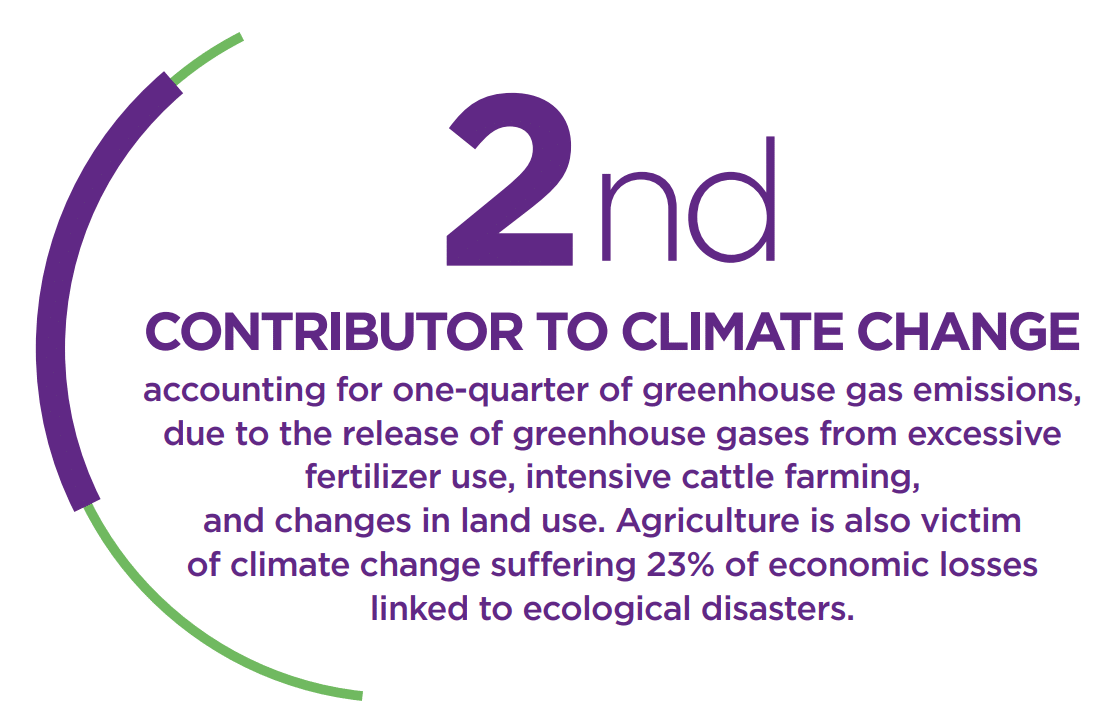
Intensive livestock production contributes to four of the five primary mechanisms responsible for biodiversity loss: habitat change, global warming, overexploitation, and pollution.
To address environmental challenges, nutritional requirements, and animal welfare concerns, our diets should prioritize plant-based products and include a reduced proportion of animal proteins, while focusing on meat from sustainable and regenerative practices.