
MENU
CLOSE
Summit
Other events
Publications
About

How to address the challenges of CHANGING HABITS?
To limit global warming, change should come from all sectors of society:
government, businesses, and individuals. Individual action, whether through behavioral changes or household-level investments, is essential, bearing in mind that the majority of the effort still depends on collective action. What are the key individual levers that need to be activated?
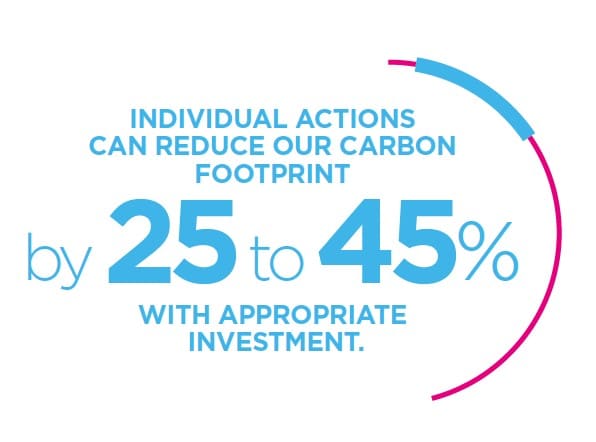
Prioritizing efforts in individual consumption and investments
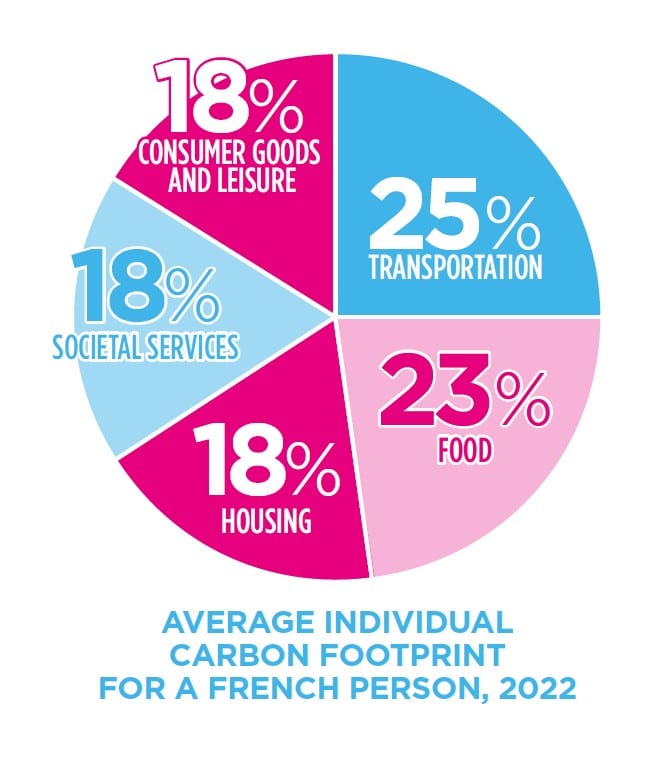
To comply with the Paris Agreement, each individual should adapt their lifestyle to achieve an average carbon footprint of 2 tons per year, which is five times less than the current French average of 10 tons per person per year.
Adapting our consumption habits begins with knowing significant orders of magnitude (see the graphic on the side for reference).
• Reducing the consumption of meat and avoiding air travel
usually have the most considerable impact.
• Buying fewer new clothes and items, consuming locally,
and reducing heating in homes also lead to a significant decrease in carbon footprint.
• The way we invest our money also plays an important part:
we can choose banking or savings products promoting the protection of our environment, and invest in energy-saving innovations, such as home renovation, insulation, and green energy
Did you know?
According to Oxfam, saving 10,000 euros could result in emitting up to 3.5 tons of eqCO2
per year.
Key figure
A minority of 25% would be enough
to change public opinion
Thinking bigger from individual to collective action
Individual and collective action go hand in hand. Our individual actions can influence our peers.
Between 55% and 75% of the actions should come from the government, businesses and, on a wider scale, from a fundamental review of the paradigm in which we live in.
As individuals, we can join collective organizations, participate in large-scale actions, contribute to raising-awareness actions, promote alternative solutions.
According to ADEME, systemic transition includes 4 levers:
• Develop a transdisciplinary culture
• Experiment and co-construct through collective intelligence
• Train decision-makers
• Create a network of pioneering actors.